When It’s Time to Brake Repair: Seasonal Brake Issues Columbia Drivers Face
Table of Contents
- Why Brake Problems Are Often Seasonal
- How Brakes Wear Over Time: A Quick Overview
- Spring Brake Issues: Moisture, Rust, and Pothole Damage
- Summer Brake Problems: Heat Stress and Brake Fade
- Fall Brake Issues: Debris, Temperature Swings, and Early Warning Signs
- Winter Brake Problems: Salt, Slush, and Reduced Traction
- Common Warning Signs: When It’s Time to Brake Repair
- Why Seasonal Brake Repairs Cost Less Than Emergency Fixes
- Brake Inspections for Used Cars: What Buyers Should Know
- How Driving Habits Affect Seasonal Brake Wear
- Brake Repair vs. Brake Replacement: What’s the Difference?
- Seasonal Brake Maintenance Tips for DMV Drivers
- Why Local Knowledge Matters for Brake Repair
- When Brake Issues Signal It’s Time to Trade In
- Final Thoughts: Seasonal Awareness Keeps You Safer
Why Brake Problems Are Often Seasonal
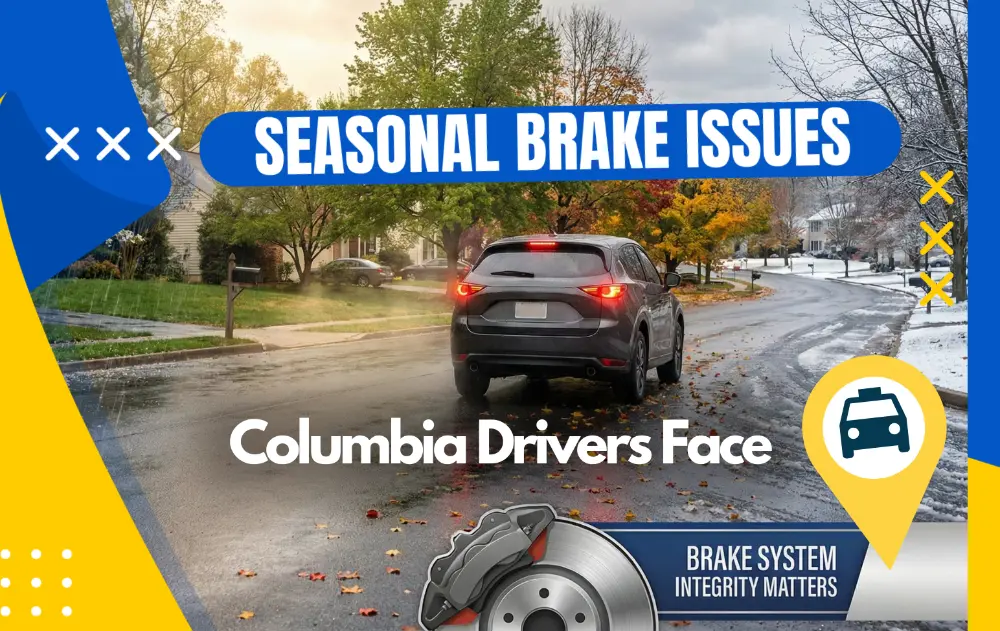
Many drivers don’t realize that brake issues are often seasonal, especially in areas like Columbia, Elkridge, and Ellicott City, where weather patterns shift dramatically throughout the year. From hot, humid summers to icy winters and debris-filled fall roads, each season introduces unique challenges that affect braking systems.
Understanding when it’s time to brake repair isn’t just about listening for noise or watching a warning light. It’s about recognizing how local climate, driving habits, and road conditions gradually wear down brake components—and knowing when repair is safer and more cost-effective than waiting, especially if you have invested in a pre-owned vehicle in 2025.
At Bumble Auto, drivers across the DMV area regularly ask the same question:
“Is this normal seasonal wear, or do my brakes need attention now?”
This guide breaks down the most common seasonal brake issues Columbia drivers face, how to spot warning signs early, and what smart drivers can do to stay safe year-round.
How Brakes Wear Over Time: A Quick Overview
Before diving into seasonal problems, it’s helpful to understand how braking systems wear.
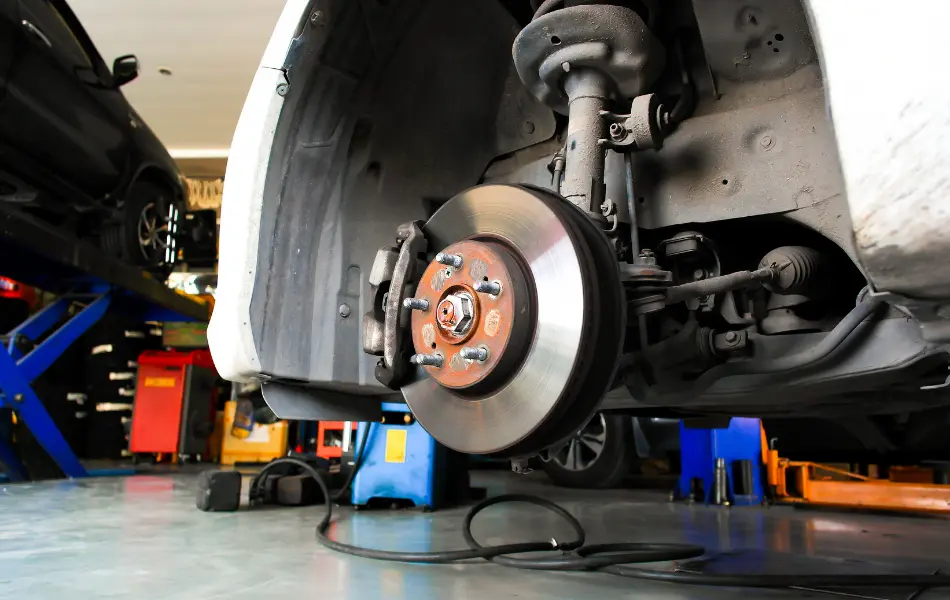
Modern braking systems include:
- Brake pads
- Rotors (discs)
- Calipers
- Brake fluid
- Brake lines
These components are constantly exposed to:
- Heat
- Moisture
- Road debris
- Pressure and friction
Seasonal changes accelerate wear differently depending on the time of year.
Spring Brake Issues: Moisture, Rust, and Pothole Damage
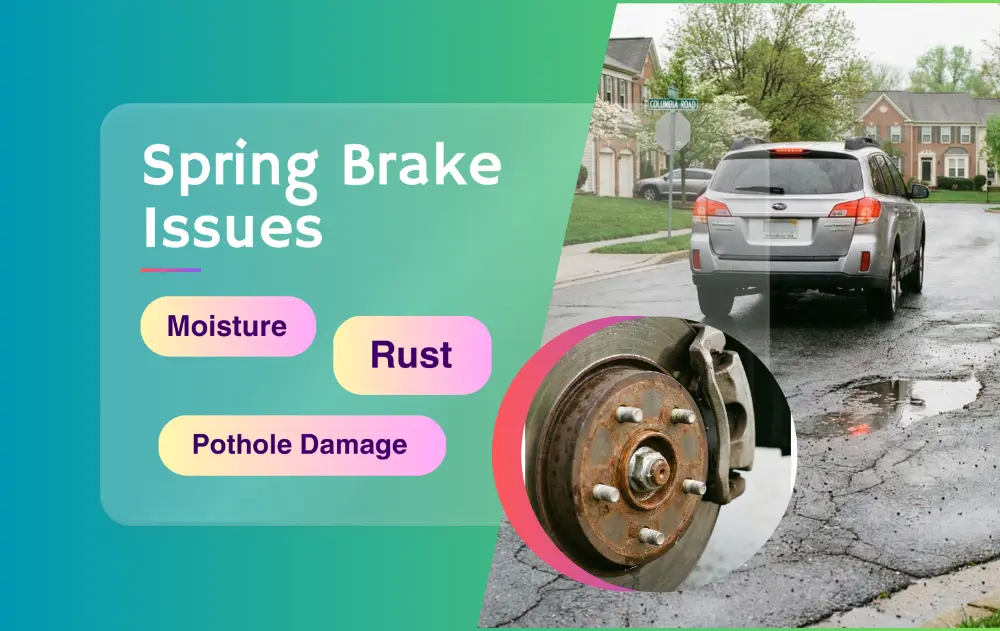
Spring in Columbia and Ellicott City often brings:
- Heavy rain
- Lingering road salt
- Potholes from winter freeze-thaw cycles
Rust and Corrosion
After winter, moisture combines with leftover salt residue, increasing the risk of:
- Rotor rust
- Caliper corrosion
- Seized brake components
Surface rust is normal, but deep corrosion can reduce braking efficiency and cause uneven wear. That’s why it's important to follow European car maintenance DIY tips.
Pothole Impact Damage
Spring potholes can:
- Warp rotors
- Damage suspension components that affect braking balance
- Cause vibration during braking
If your steering wheel shakes when braking, spring damage may be the cause.
Summer Brake Problems: Heat Stress and Brake Fade
Summer driving in Columbia, Elkridge, and Washington D.C puts brakes under extreme heat stress.
Brake Fade Explained
Brake fade occurs when:
- Excessive heat reduces friction
- Brake fluid overheats
- Stopping distance increases
Drivers often notice:
- A “soft” brake pedal
- Reduced stopping power
- Burning smells after long drives
Urban Traffic & Stop-and-Go Wear
DMV traffic patterns—especially around:
- I-95
- Route 29
- Route 100
cause repeated braking, accelerating pad and rotor wear during the summer months.
Fall Brake Issues: Debris, Temperature Swings, and Early Warning Signs
Fall is often when drivers first notice subtle brake problems.
Road Debris Accumulation
Leaves, dirt, and debris, which a budget-friendly oil change could help prevent, can:
- Get trapped near calipers
- Cause uneven pad wear
- Create squealing noises
Temperature Fluctuations
Cool mornings and warm afternoons cause metal expansion and contraction, which may:
- Reveal warped rotors
- Expose worn pads
- Trigger brake noise that disappears later in the day
Fall is often the best time to inspect your brakes and, for example, perform maintenance tasks such as replacing brake lights before the stress of winter sets in.
Winter Brake Problems: Salt, Slush, and Reduced Traction
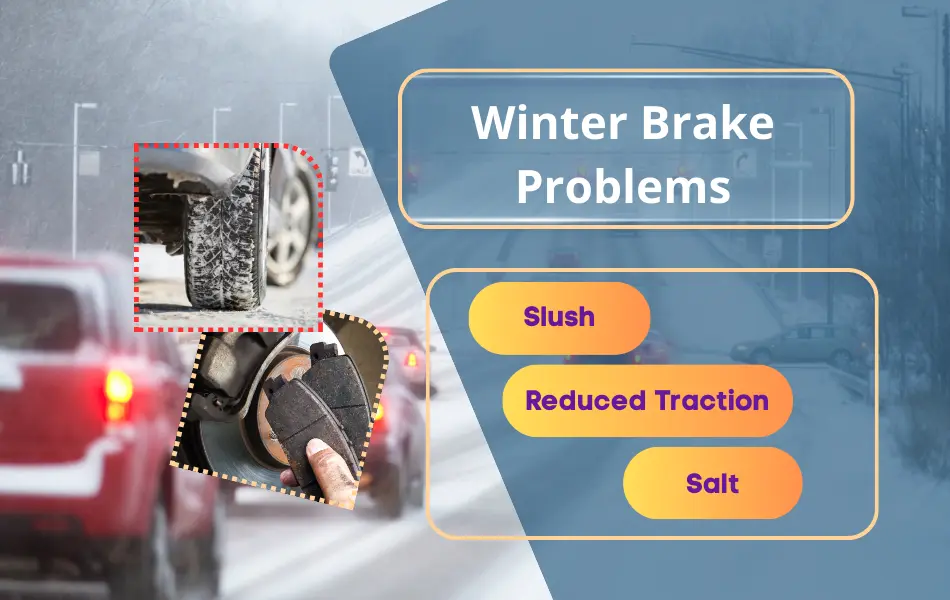
Winter driving in Maryland and D.C. presents some of the most dangerous braking conditions.
Road Salt & Corrosion
Salt accelerates:
- Brake line corrosion
- Caliper seizure
- Premature rotor failure
Slush and Ice Effects
Winter conditions can cause:
- ABS activation more frequently
- Longer stopping distances
- Uneven braking feel
Brakes must work harder when traction is limited, increasing wear.
Common Warning Signs: When It’s Time to Brake Repair
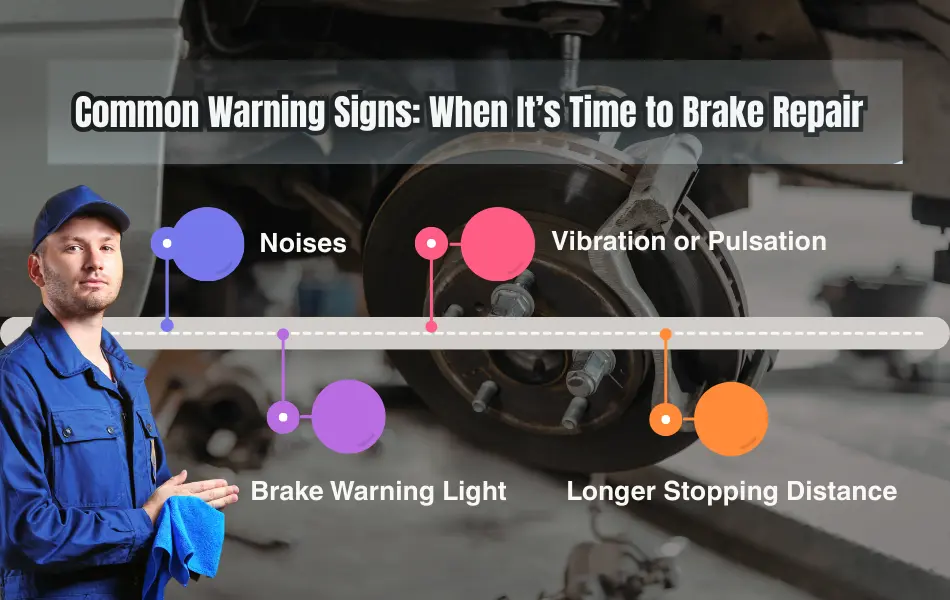
Seasonal wear often reveals itself through warning signs drivers shouldn’t ignore.
Noises
- Squealing: worn pads or debris
- Grinding: metal-on-metal contact
- Clicking: loose components
Vibration or Pulsation
Often caused by:
- Warped rotors
- Uneven pad wear
Brake Warning Light
Can indicate:
- Low brake fluid
- ABS issues
- Sensor-detected pad wear
Longer Stopping Distance
A major safety concern—especially in winter or rain.
Why Seasonal Brake Repairs Cost Less Than Emergency Fixes
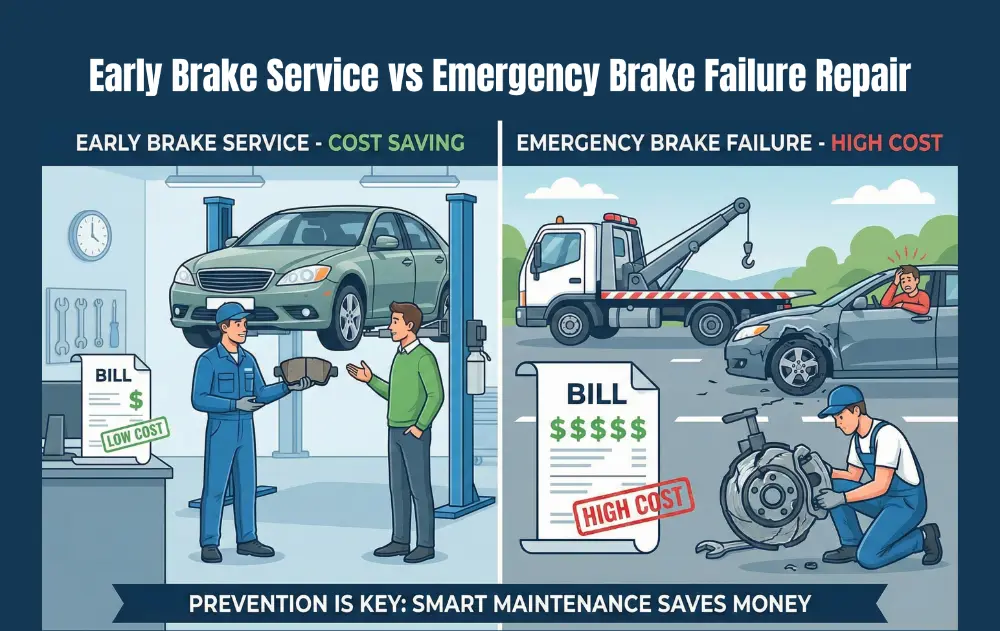
Many drivers delay brake service, assuming minor symptoms can wait. Unfortunately, seasonal wear compounds quickly.
Delaying repair can lead to:
- Rotor replacement instead of pad replacement
- Caliper damage
- Brake line repairs
- Higher labor costs
At Bumble Auto, technicians frequently see vehicles where early seasonal maintenance could have prevented major repairs.
Brake Inspections for Used Cars: What Buyers Should Know
If you’re shopping for a used vehicle in Columbia, Elkridge, or Ellicott City, brake condition matters more than most buyers realize.
Seasonal Wear Varies by Driving History
A car driven mainly in:
- Stop-and-go D.C. traffic
- Hilly Ellicott City roads
- Long highway commutes
will show different brake wear patterns.
Bumble Auto’s Approach
At Bumble Auto Service Center, used vehicles are evaluated carefully, including:
- Brake pad thickness
- Rotor condition
- Brake responsiveness
This ensures buyers aren’t inheriting hidden seasonal brake problems.
How Driving Habits Affect Seasonal Brake Wear
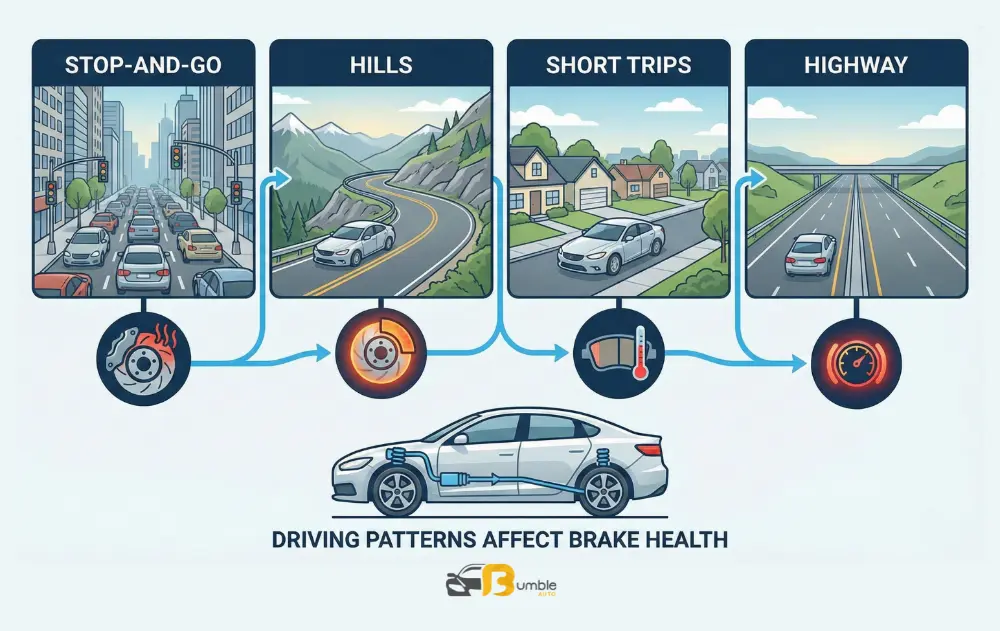
Local driving habits strongly influence when it’s time to brake repair.
Factors include:
- Frequent short trips
- Heavy traffic commuting
- Aggressive braking
- Driving in hilly terrain
Drivers in Ellicott City, for example, often experience faster brake wear due to elevation changes.
Brake Repair vs. Brake Replacement: What’s the Difference?
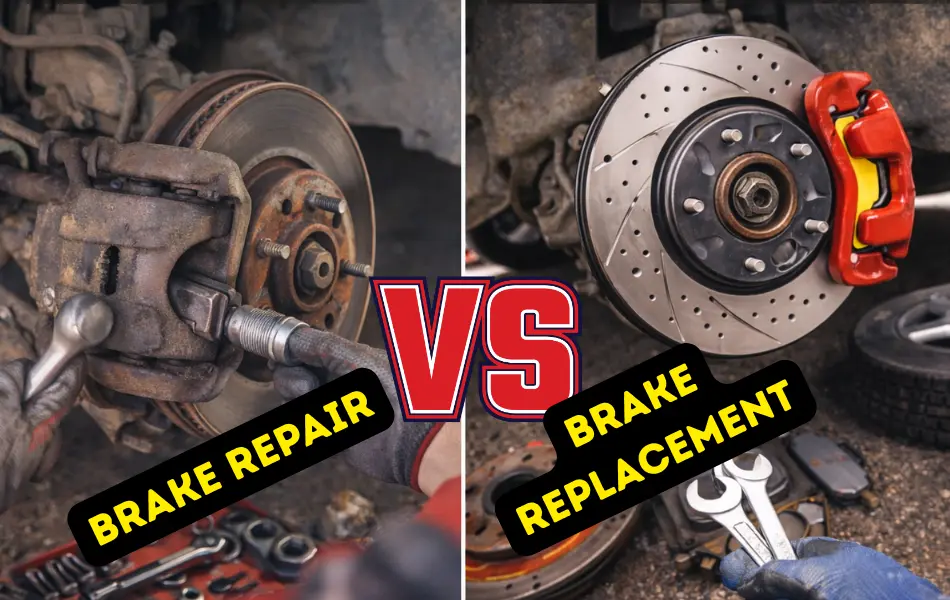
Not all brake issues require full replacement.
Brake Repair May Include
- Pad replacement
- Rotor resurfacing
- Brake fluid flush
Brake Replacement May Be Needed When
- Rotors are warped beyond specs
- Calipers are seized
- Brake lines are corroded
Seasonal inspections help determine the most cost-effective solution.
Seasonal Brake Maintenance Tips for DMV Drivers
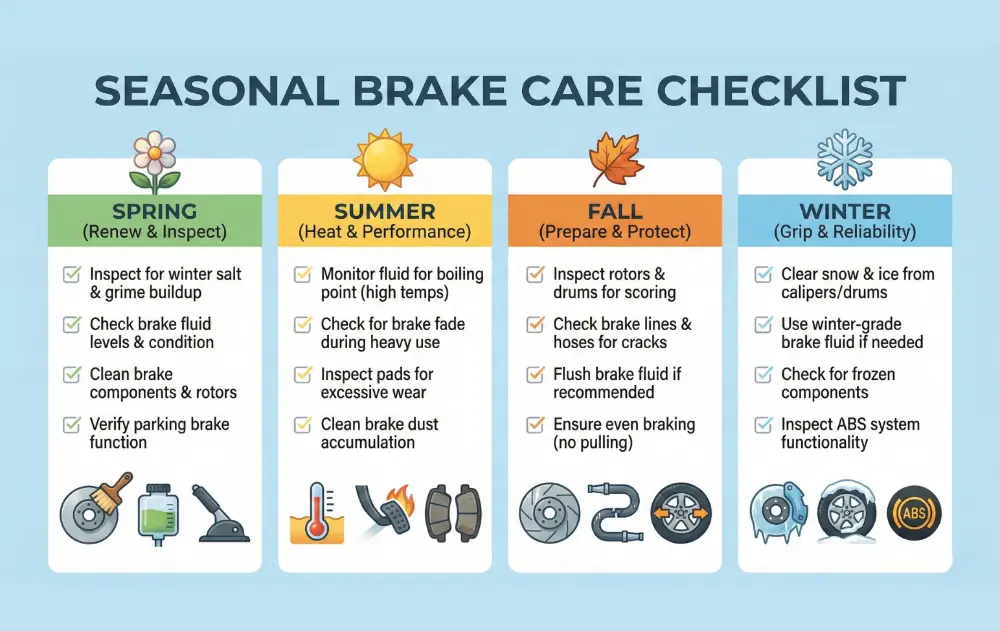
Spring
- Wash undercarriage to remove salt
- Inspect for rust
Summer
- Avoid riding brakes in traffic
- Watch for overheating signs
Fall
- Schedule a safety inspection
- Listen for new noises
Winter
- Rinse salt buildup
- Address ABS warnings immediately
Why Local Knowledge Matters for Brake Repair
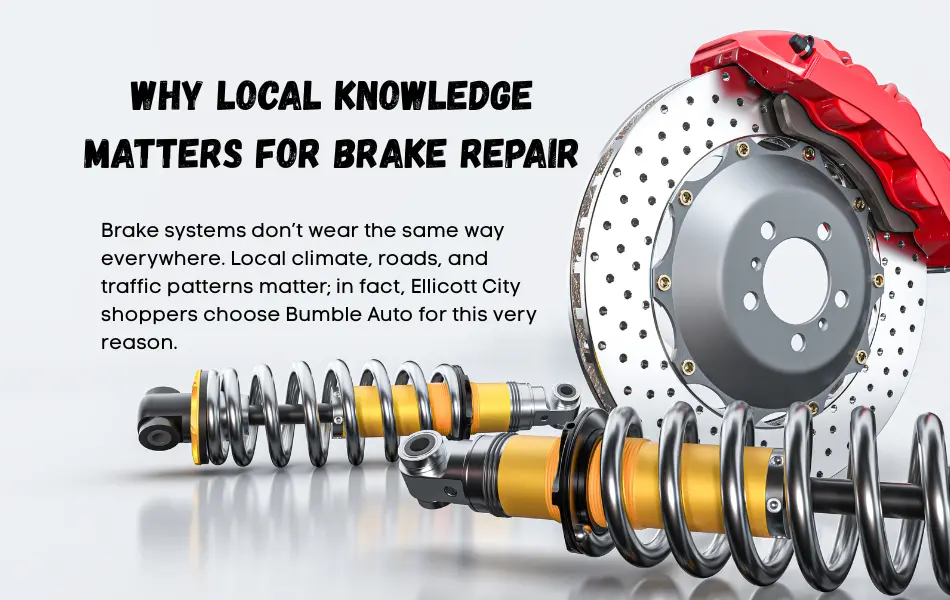
Brake systems don’t wear the same way everywhere. Local climate, roads, and traffic patterns matter; in fact, Ellicott City shoppers choose Bumble Auto for this very reason.
Bumble Auto’s experience serving Columbia, Elkridge, Ellicott City, and Washington D.C means understanding:
- Regional driving stress
- Seasonal patterns
- Common brake failures in DMV vehicles
That insight helps drivers make smarter repair and buying decisions.
When Brake Issues Signal It’s Time to Trade In
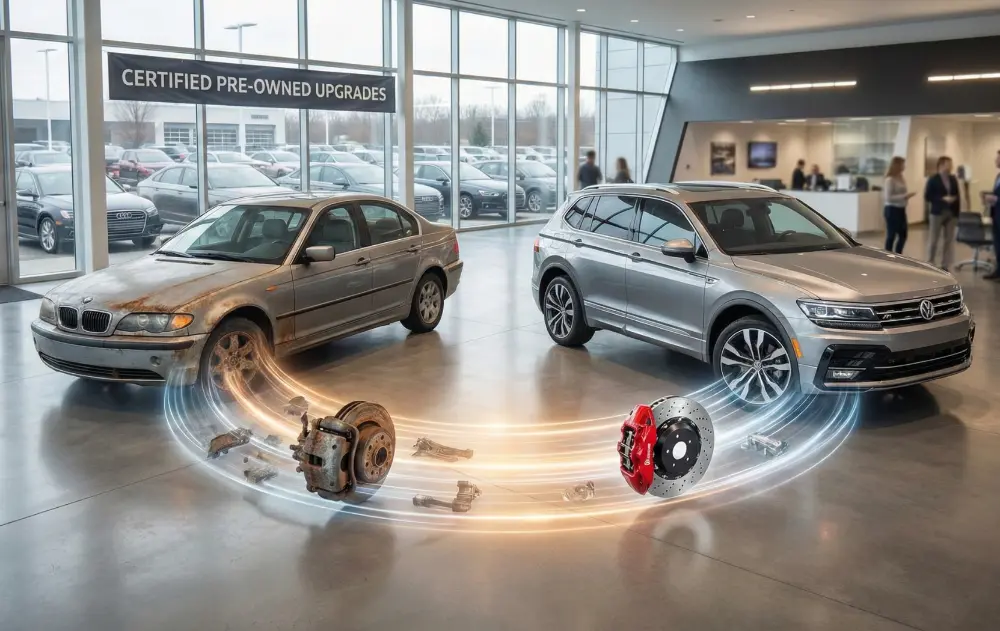
In some cases, recurring brake problems—combined with other aging components—may signal that upgrading vehicles makes more financial sense.
Bumble Auto helps drivers:
- Evaluate repair vs. trade-in costs
- Accurately assess vehicle value
- Transition smoothly into a safer, more reliable used car
Final Thoughts: Seasonal Awareness Keeps You Safer
Understanding when it’s time to brake repair isn’t bout reacting to failure—it’s about anticipating seasonal stress before it becomes dangerous.
For drivers in Columbia, Elkridge, Ellicott City, and the greater DMV area, seasonal brake awareness leads to:
- Lower repair costs
- Safer driving
- Better vehicle longevity
Whether maintaining your current car or evaluating a used one, brake health should always be part of the conversation, especially if you consider trading in your old car for an upgrade.